Guides/Baby photo safety at homePhoto safety at home
Baby photo safety at home

You can take the monthly photo with a calm setup. Put your baby on their back, on a flat spot at floor level, and stay close enough to reach them.
Notes below follow the American Academy of Pediatrics, the NHS, and the CPSC. They cover the photo setup and don't add advice past those pages.
Where should your baby lie for the photo?

Lay your baby on their back for a sleep-like photo. The American Academy of Pediatrics says to place a baby on their back for naps and at night.
Use a firm, flat surface that doesn't indent under your baby. The AAP says a surface that inclines more than 10 degrees isn't safe for sleep.
The NHS says to use a firm, flat mattress for sleep. Place your baby on their back to sleep.
For the photo, use a flat spot on the floor. The NHS says to change a nappy on a changing mat on the floor.
The CPSC says to place your baby on a firm flat sleep surface, on their back, with no added items.
What should stay off a bed or a couch?
Don't leave your baby on a bed, sofa, or changing table. The NHS says not to leave them there even for a second, because they can roll off.
Keep a bouncing cradle or a car seat on the floor. The NHS says a baby's wriggling can tip one off a table or a worktop.
The CPSC says not to leave your baby unsupervised in a product that isn't made for safe sleep. The CPSC names rockers, gliders, soothers, and swings. It says not to use them for infant sleep if they incline more than 10 degrees.
What stays out of a sleep-like setup?

Skip loose blankets and pillows when the photo looks like sleep. The AAP says soft objects and loose bedding can increase the risk of suffocation.
Keep pillows, duvets, cot bumpers, loose blankets, and soft toys out of the sleep space. The NHS says those items can cover a baby's face and head.
The CPSC says the sleep space should hold nothing but a fitted sheet. Don't add pillows or blankets to that sleep space.
If you worry they'll get cold, dress them in a layer of clothing. The AAP says you can use a wearable blanket instead of loose bedding.
Where does the sticker go?
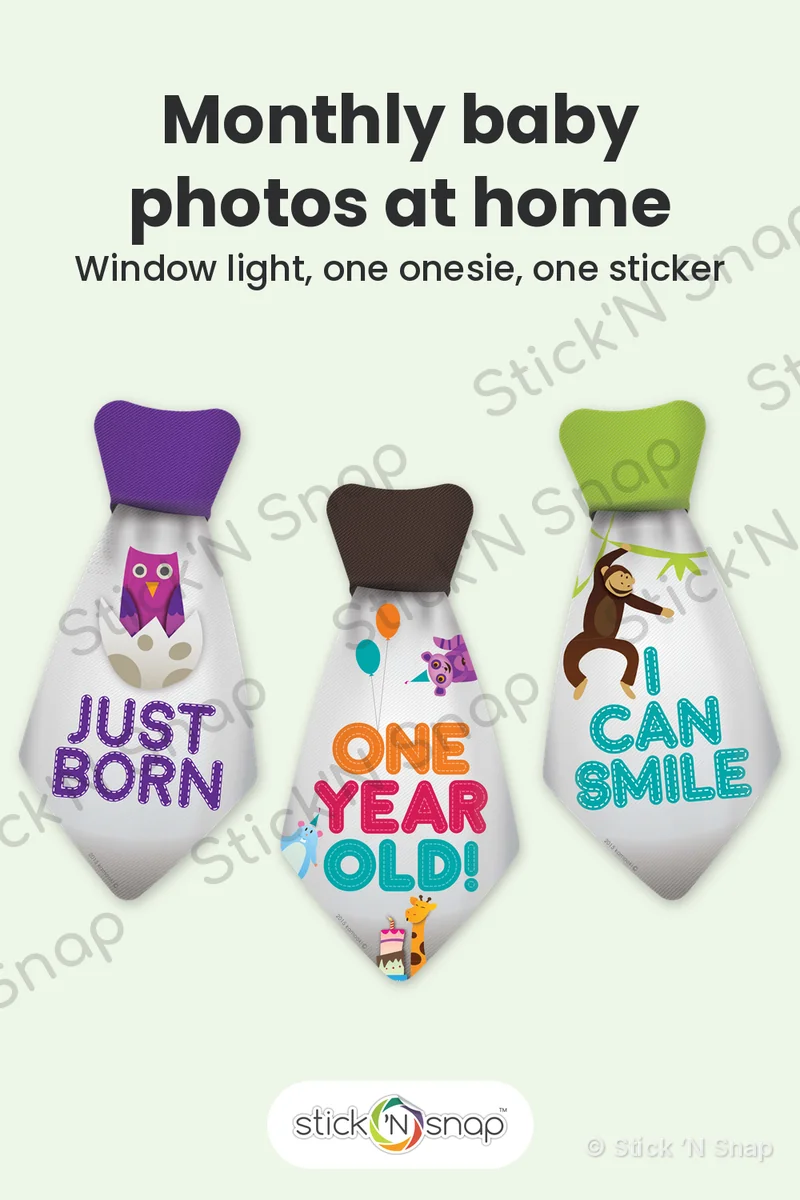
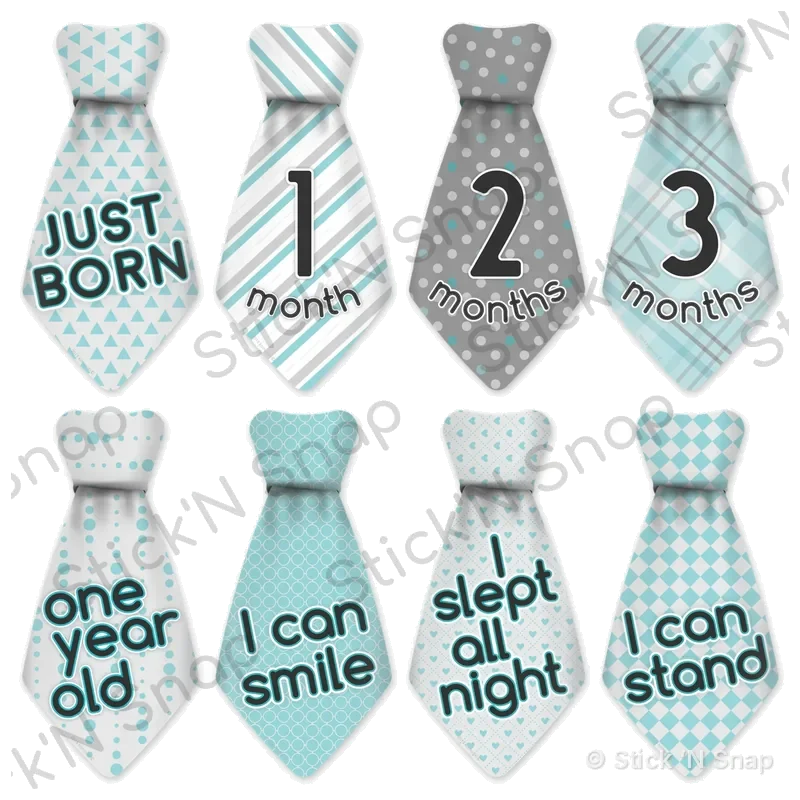
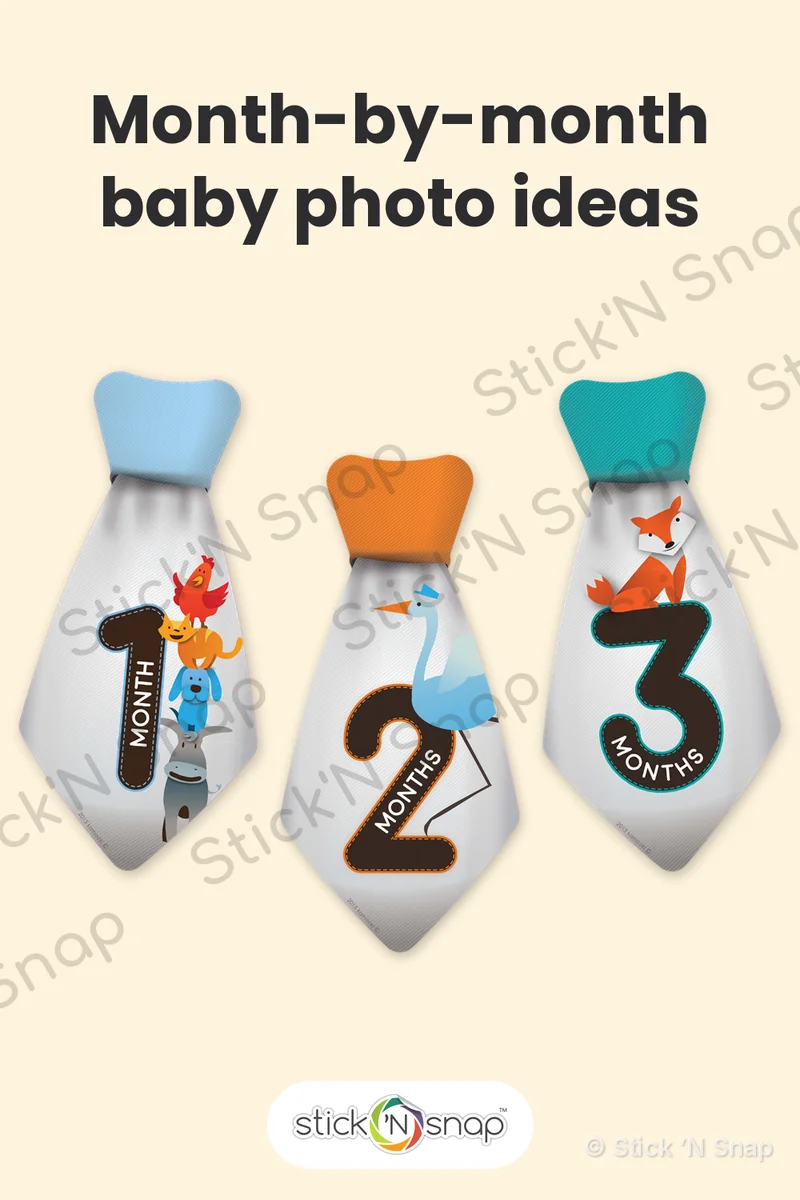
Press the sticker onto a clean, dry onesie, not onto skin. Take the photo, then peel the sticker off. See the onesie sticker sets.
Keep loose stickers out of reach so they aren't a small object nearby. The NHS says to keep buttons, coins, and small toy parts out of reach.
Monthly baby photos at home covers the light and the plain background for that same setup.
How close should you stay?
Keep an adult hand within reach for the whole photo, and don't step away to grab a prop.
The NHS says not to leave your baby unattended on a bed, sofa, or changing table, even for a second.
If you try tummy time while they're awake, an awake adult should supervise. The AAP says awake tummy time needs an awake adult watching.
Which pages are these notes from?
These notes follow the pages below, opened on October 20, 2026.
- How to Keep Your Sleeping Baby Safe is the AAP page on HealthyChildren.org.
- Sudden infant death syndrome (SIDS) is the NHS page on safer sleep.
- Baby and toddler safety is the NHS page on falls and small objects.
- Safe Sleep for cribs and infant products is the CPSC page on infant sleep.
- Childproofing Your Home is the CPSC page on a firm flat sleep surface.